
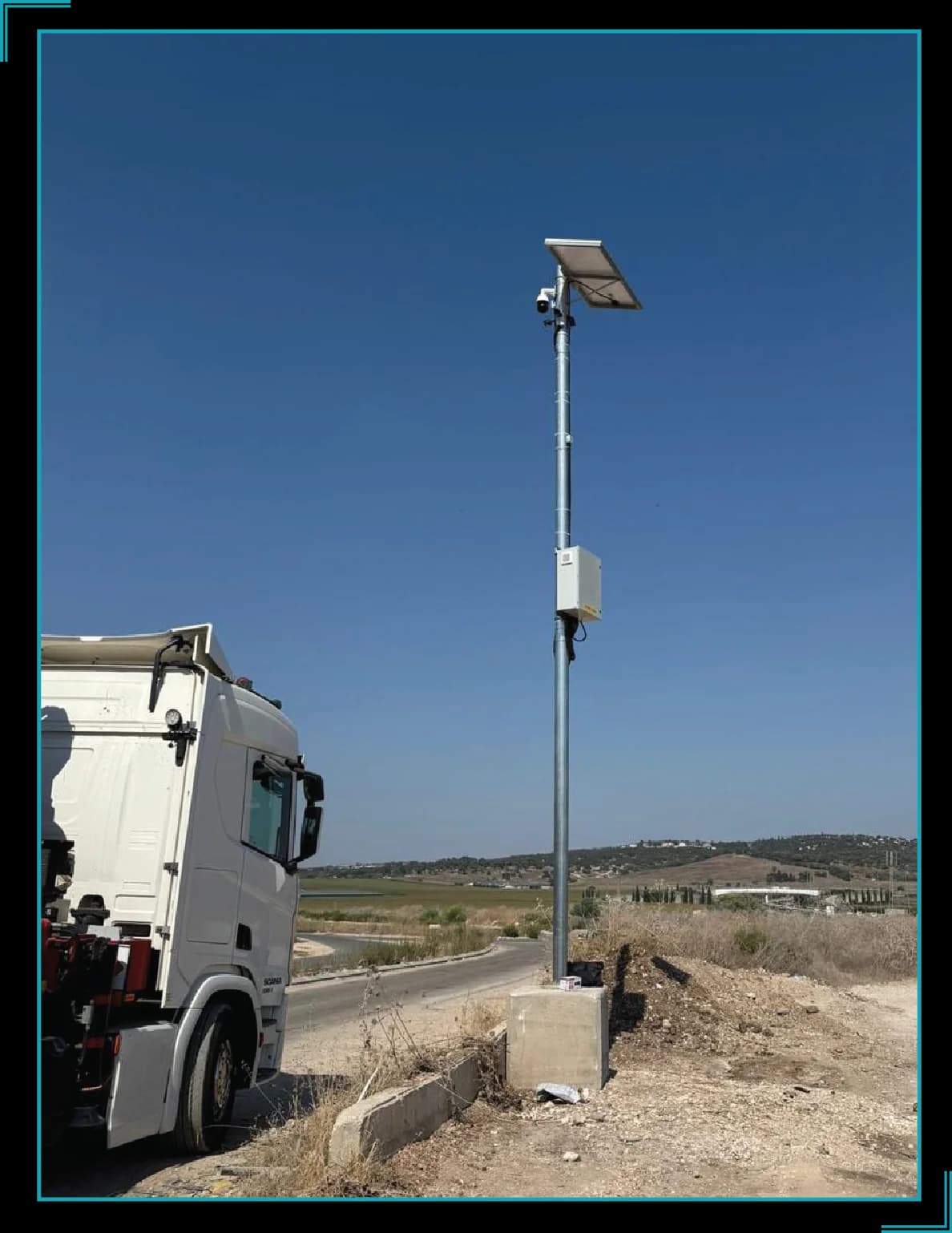
The familiar equation of perimeter security starts with infrastructure: trenching, fiber, power points, a mast and cameras. On an urban site that is a project of weeks; on a remote site - sometimes months, at a cost that defeats the purpose. Meanwhile the site is exposed: heavy equipment, temporary structures, farmland and utility facilities absorb theft and vandalism precisely while no one is watching.
A standalone observation post flips the order: instead of bringing infrastructure to the camera, you bring the camera with its own infrastructure. Solar power, local recording, dual-carrier cellular and RF links between posts - the post operates where there is no grid and no internet. It mounts on a pole, a structure or a tree, with no digging and no complicated permits. When the site moves, the post moves with it.
The part that truly matters is not the camera but what sits behind it: an AI computer that tells animals and wind apart from a person or a vehicle, a PA channel for real-time warnings, and tamper detection on the post itself. The result is few, correct alerts instead of a stream of false alarms - so the monitoring team can actually respond.
And after an event? That is where investigation comes in: everything is recorded and documented, and the relevant moments can be retrieved from thousands of hours within minutes - by person, vehicle or zone. A standalone post, real-time analytics and retroactive investigation together give remote sites what used to be reserved for fully wired facilities: a complete security envelope, deployed in days rather than months.
Contact Us
Contact usRelated articles
VMS: a buyer's guide to choosing a video management system
A video management system (VMS) is the heart of any control room. What separates a system that merely records from one that understands what the cameras see - and which questions to ask before you sign.
Video and analytics in two separate systems? That's a double headache
In many organizations the VMS records on one side and the analytics system alerts on the other - and the bridge between them is a tired human facing two screens. Here's the unified approach.