
Construction
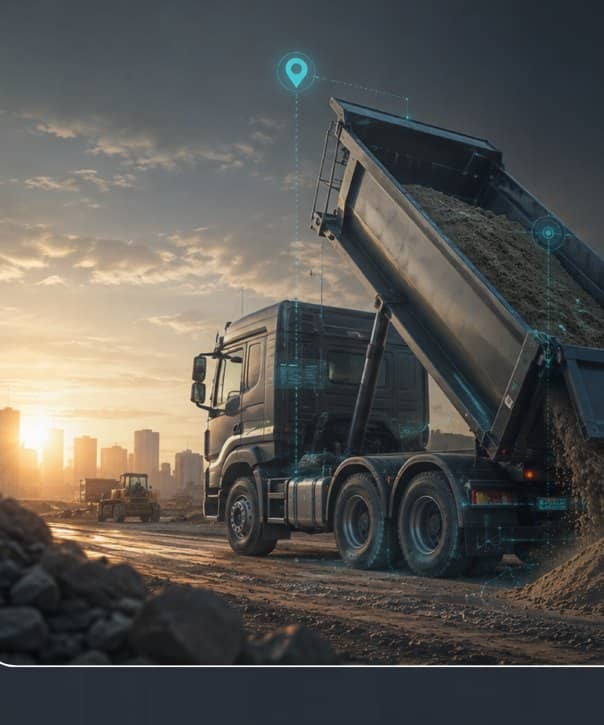
Smart eyes on the construction site: AI video for cranes, heavy-truck and earthworks control, and operational safety for contractors - built on our field-proven systems. Every earth and waste haul is backed by cross-verified evidence: video of the loading, the route and the destination - a paper ticket can be forged, a cross-verified evidence chain cannot.

From the field
An evidence chain for earth and construction-waste haulage
A paper weighing ticket can be forged; an evidence chain cannot. Every haul closes with a photo of the loading, the actual route and the destination - cross-verified automatically. When a dispute arrives over how many trucks went out, where they dumped and what they carried, the answer is documented data. And when you need to prove the material went to a licensed site - to the client, the authority or an inspector - there's a cross-verified report per haul instead of a paper ticket.
- Loading photo + route + destination - cross-verified automatically
- Ready to prove disposal at a licensed site
- An end to 'how many trucks and where' arguments
AI video for cranes and work at height
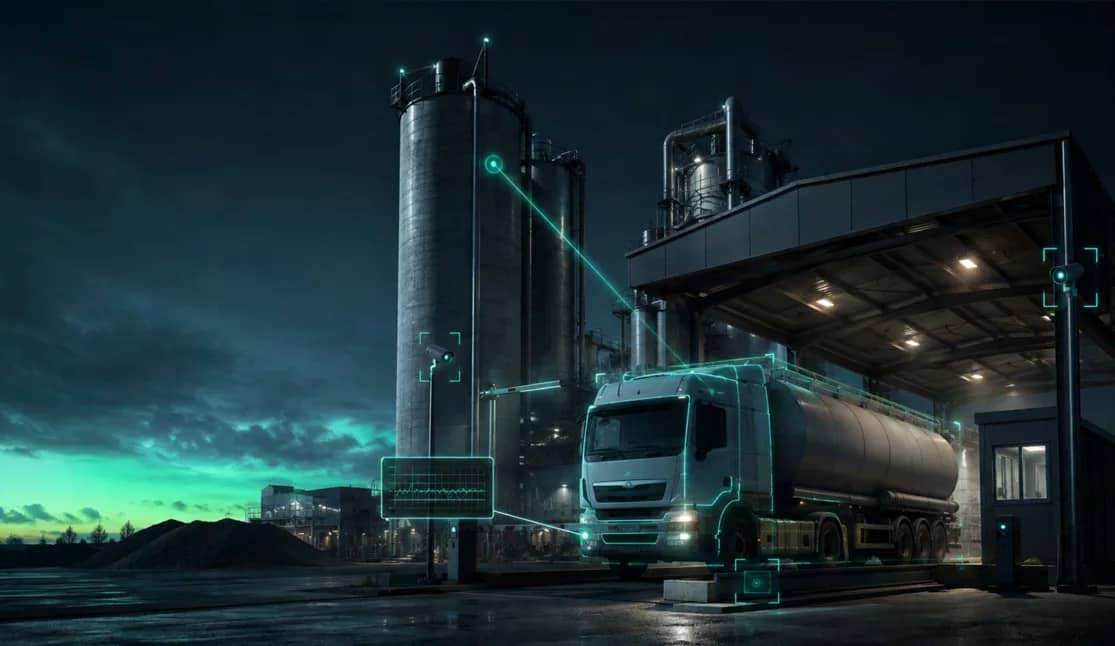
A crane is the heaviest safety risk on site. An AI camera array around the crane and the lifting arm gives the operator and site manager eyes in the blind spots, detects intrusion into the working radius and documents every lift - for safety coaching and incident review. When a near-miss happens, there is video instead of conflicting testimony.
- Blind-spot coverage around the crane
- Alert on intrusion into the working radius
- Every lift documented - for coaching and review
The documented contractor stops absorbing fines that aren't his fault
Technological oversight is not a stick against the contractor - it is a shared data table. A contractor with full documentation stops absorbing fines for complaints that aren't his fault, closes the monthly settlement with the authority in days instead of weeks, and shows real execution against the work plan. That is how we build it with our customers: one true picture for authority and contractor alike.
- Fewer fines for complaints that aren't the contractor's fault
- A monthly settlement that closes in days
- Real execution against the work plan
Site security without infrastructure - the equipment left overnight
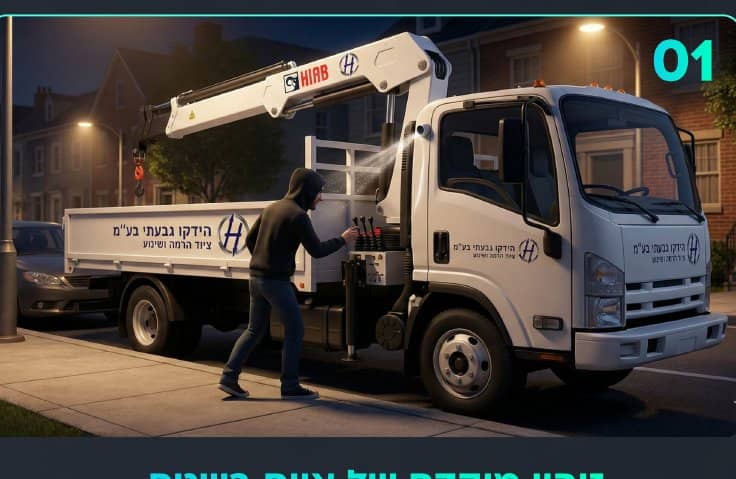
A construction site sits exposed half the time: cranes, excavators and generators stay overnight and on weekends with no fence, no power and no fiber. A self-contained observation post with solar feed, local recording and cellular comms covers the site within days - no trenching, no permits. Intrusion is detected in real time, with an audible on-site warning and video to the phone, and when the site closes you move the post to the next project.
- Coverage within days - no power, fiber or trenching
- Intrusion in real time - audible warning + video to phone
- A mobile post - moves to the next site
Plan vs. actual for a mixed fleet - more cycles per day
A contractor runs semi-trailers, mixers, dump trucks and cranes - usually from different vendors, each with its own system. One roll-out unifies every vehicle and the subcontractors on a single map: location, speed, status and video. The daily plan-vs-actual comparison shows where a cycle is being wasted, and route optimization squeezes another run out of the same workday - fewer kilometers and less fuel for the same output.
- Mixed fleet and subcontractors on one map
- Plan vs. actual - where a cycle is wasted
- Fewer km and fuel for the same output
Site traffic safety - a person on foot near a heavy vehicle
Most serious site accidents are a heavy vehicle meeting a person on foot in a blind zone. The AI cameras on the vehicles detect a person in the danger area around the vehicle and warn the driver before contact - and document every event and near-miss. For the safety manager that means real material for review and coaching instead of conflicting testimony, and for the contractor a documentation chain showing measures were taken - critical against a regulator and against a claim.
- Person-in-danger-zone detection + driver alert
- Every near-miss documented for coaching
- A documentation chain against regulator and claim
One site platform versus separate solutions
Telematics knows where the vehicle is - not what it loaded or where it dumped. Ticketing software manages paper - it doesn't see the field. Site security watches the fence - it isn't wired into operations. The difference: one system that closes an evidence chain from loading to billing, from one accountable vendor.
| Generic construction / GPS telematics | Ticketing & weighbridge software | Standalone site security | MIS26 | |
|---|---|---|---|---|
| Haulage evidence chain: video + route + destination | ✓ | |||
| OCR on the delivery slip + real-time billing | Partial | ✓ | ||
| AI video for cranes and work-at-height safety | Vendor-dependent | ✓ | ||
| Person-in-danger-zone detection around heavy vehicles | Partial | ✓ | ||
| Infrastructure-free site security - a mobile post | Partial | ✓ | ||
| Plan vs. actual for a mixed, multi-vendor fleet | Partial | ✓ | ||
| Proof of material disposal at a licensed site | Partial | ✓ | ||
| Certified information security (ISO 27001, 27701) | Vendor-dependent | Vendor-dependent | Vendor-dependent | ✓ |
The comparison refers to common solution categories in the market, not to any specific vendor.
Frequently Asked Questions
Our sites change constantly - how does that work?
The systems are installed on the vehicles - not the site - and travel with them from project to project. Observation posts are mobile and redeploy within days, no infrastructure.
What does this give us toward the client and its reporting?
Every ton leaving the site is documented and verified: OCR on slips, video and location per dump and transparent real-time billing - settlement closes on data instead of arguments.
When we switch subcontractors - whose data is it?
Yours. The system is installed and managed at the main-contractor level, so haul history, documentation and settlement stay with you even when a subcontractor rotates out. Instead of every vendor taking the data with them when they leave, you keep a continuous site picture - critical for back-settlement and review.
We have vehicles from several vendors - do we have to replace everything?
No. Semi-trailers, mixers, dump trucks and cranes all surface in one dashboard and one app, even when they come from different vendors. Instead of a separate screen per system, you get one fleet picture with the subcontractors, including plan-vs-actual per vehicle.
What protects the costly equipment overnight and on weekends?
A self-contained observation post with solar feed, local recording and cellular comms covers the site with no power or fiber. Intrusion is detected in real time with an audible on-site warning and video to the phone, and AI cameras on the cranes and vehicles detect unauthorized access even when no one is on site.
Oversight of the contractor - isn't it just a stick against us?
The opposite. A contractor with full documentation stops absorbing fines for complaints that aren't its fault, closes the monthly settlement in days instead of weeks, and shows real execution against the plan. The same true picture serves both the authority and the contractor - a shared data table, not a camera pointed at one side.
What happens without internet?
The system keeps working: recording and processing run locally on the vehicle, and data syncs to the cloud once connectivity returns - no events lost.
How is data secured?
Enterprise-grade cyber security: storage and backup to international standards, role-based permissions and an option for fully on-prem deployment with no external connection.
Want to see it on your fleet?
Tell us about your operation - we'll come back with a tailored solution.