
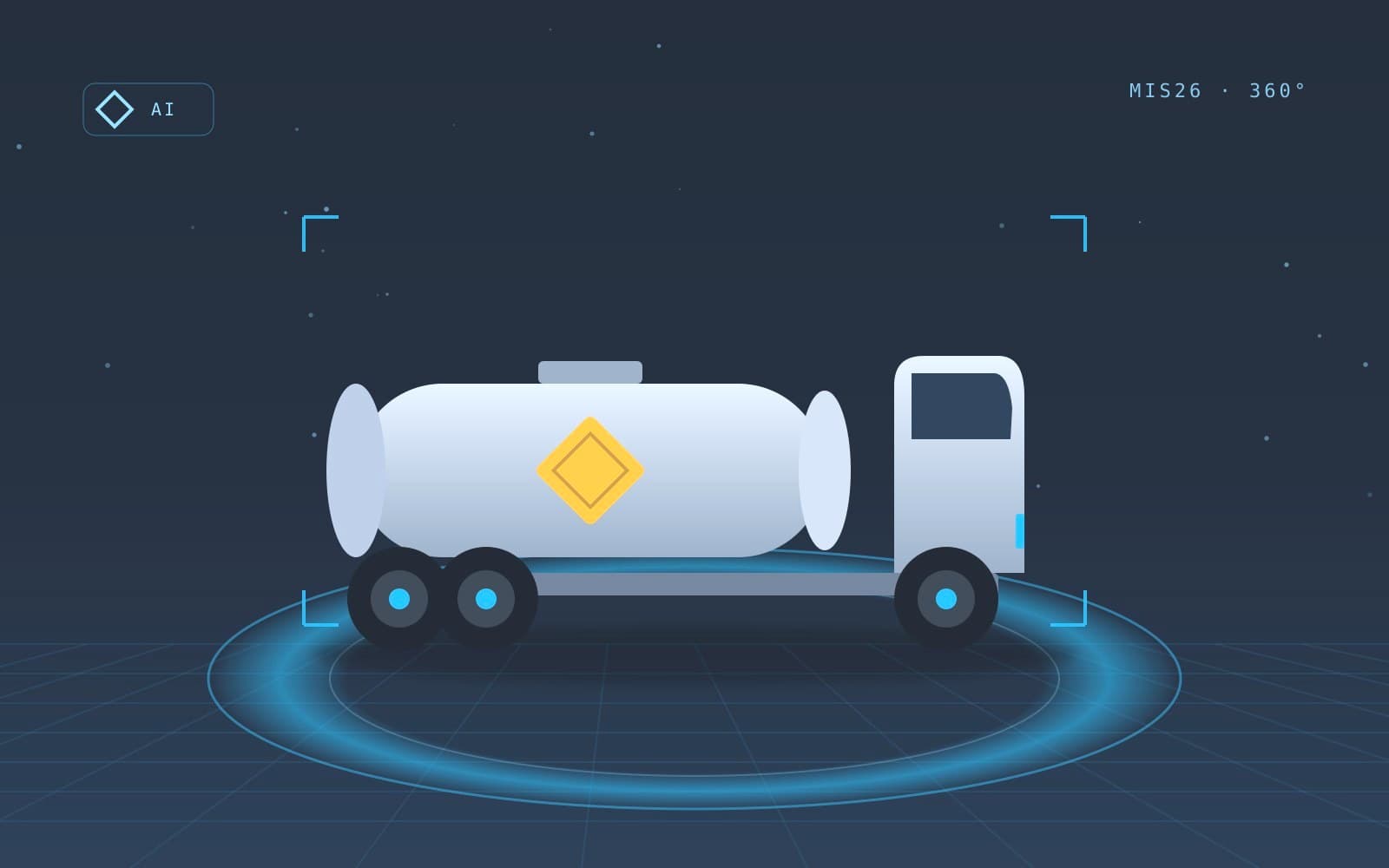
Transporting chemicals, fuels and hazardous materials concentrates risk at two points: the connection during discharge, and the area around it. Connecting to the wrong line or tank can cause a dangerous mix and costly damage, and a safety event at a remote discharge point usually happens with no professional eye and no documentation.
Container- or product-assignment recognition, verified against the order, raises an alert before a wrong connection - at the moment it can still be stopped. Around the discharge, the system detects a person in a danger zone, a valve opening and a leak event, and alerts the driver and the control room in real time.
One point to be precise about: a video system does not replace permits, standards and safety procedures - it supports them. What it adds is admissible documentation: time-and-location-stamped video for every delivery, pulled in minutes for any inquiry from a customer, an authority or an investigator.
The bottom line, the value is a combination of prevention and documentation. Fewer supply errors and mixes, fewer undocumented safety events, and settlement that rests on evidence rather than argument.
Contact Us
Contact usRelated articles
Concrete delivery intelligence: proof of delivery, anti-mix and pour counting
Ready-mix companies face three recurring pains at every site: delivery disputes, mix errors and waiting times. Here is how AI video on the mixer turns every pour into a measured event.
Chain of custody in feed hauling: from silo to barn
In feed trucks, one mistake - loading the wrong compartment or discharging into the wrong silo - can kill a whole flock. Here is how computer vision and OCR build a full chain of custody.
Harvest season without paperwork: proof of delivery and unload counting in agricultural hauling
Hundreds of unloads and weighings a day, every ticket typed by hand. Here is how cameras and OCR make the season measurable - without quantity and quality disputes.